Prof. Colin Hills
Co-Inventor · Carbon Mineralisation
Professor of Applied Geochemistry, University of Greenwich. Co-inventor of the accelerated carbonation technology underpinning CIAP's permanent CO₂ lock-in and aggregate production.
FEG Island Infrastructure Group originates, structures and delivers circular infrastructure platforms that transform waste, carbon and land liabilities into strategic national assets for Small Island Developing States.
Conventional waste-to-energy was designed for cities — fixed location, fixed scale, fixed economics. CIAP is a split, mobile service: the processing platform moves between islands, the finished outputs stay behind. That single design decision unlocks six advantages no static unit can match.
Ferry-deployable units land on the island ready to operate — no permanent plant, no major civil works, no decade-long build programme.
5, 15 or 30 tpd modules combine into a fleet that matches the actual waste volume — never under-utilised, never overwhelmed.
The same fleet serves multiple islands across its life — eliminating single-site stranded-asset risk that kills fixed WTE economics.
Mobility means the platform can move to a legacy site, remediate it, then return to routine service — one asset, two revenue streams.
Aggregates, blocks and mineralised carbon stay on-island as construction inputs. The processing kit moves on to the next deployment.
When a hurricane hits, the fleet redeploys to surge-affected islands within days — something a fixed factory can never do.
FEG does not sell equipment. FEG originates infrastructure solutions from first principles — identifying national challenges and engineering integrated platforms that combine technology, finance, governance and delivery.
We are mandated by governments and capitalised by institutional partners to design infrastructure where none would otherwise exist — particularly in jurisdictions where conventional models cannot economically reach.
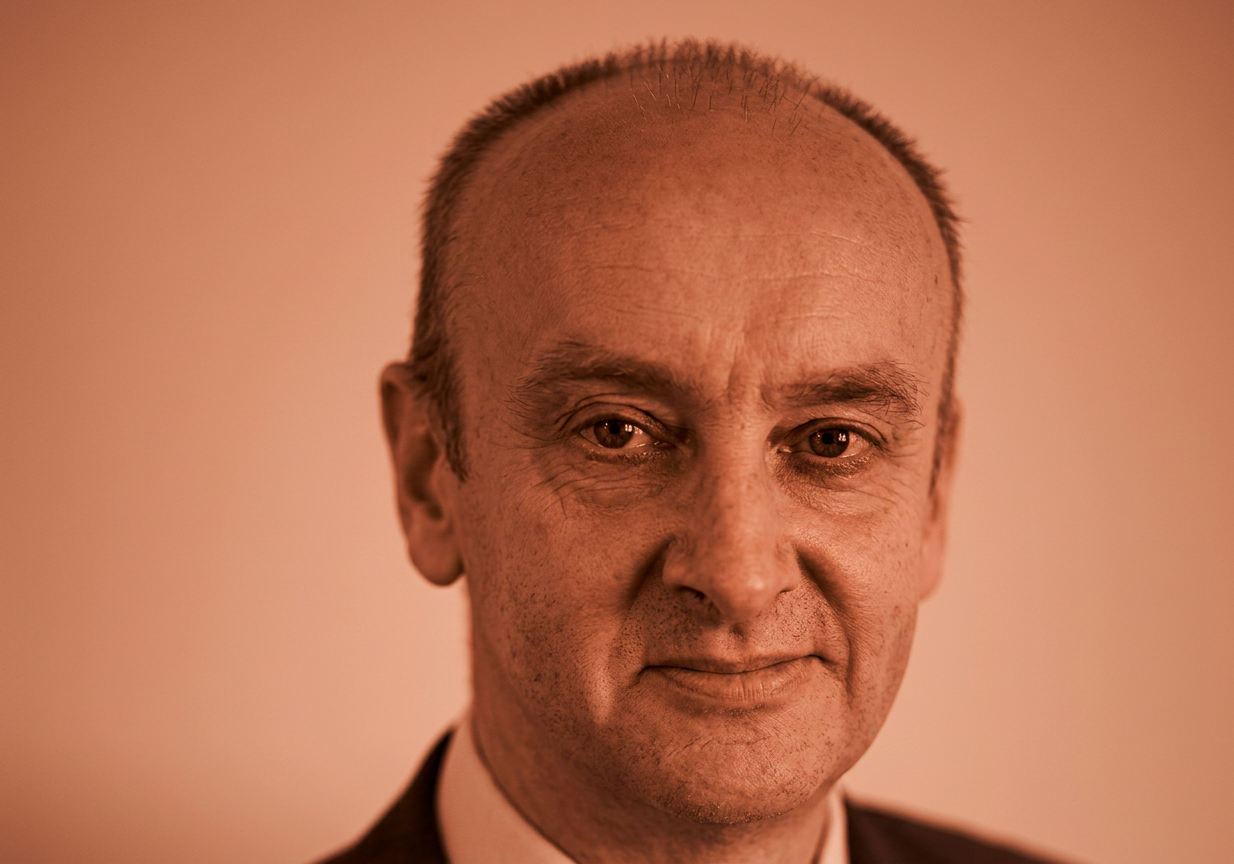
Former Managing Director of WYG Europe. Forty years delivering major infrastructure programmes across government, engineering, environmental services and strategic capital projects internationally.
Professor of Applied Geochemistry, University of Greenwich. Co-inventor of the accelerated carbonation technology underpinning CIAP's permanent CO₂ lock-in and aggregate production.
Co-inventor of the patented carbon-negative aggregate process. Three decades translating mineral carbonation science into commercial-scale circular infrastructure.
Specialist in the characterisation and re-engineering of thermal residues, ash chemistry and metal liberation for downstream recovery and mineralisation.
Leads programme governance and sovereign engagement across CIAP deployments — bridging engineering delivery, community integration and institutional finance.
Heads field deployment, mobile platform logistics and operator training across island programmes, ensuring on-site delivery meets engineering and community standards.
Behind every gate fee, carbon credit and reclaimed acre is a community whose inheritance is being defended. FEG programmes are designed to be felt at household level — in jobs, in stability, in the resilience of the coastline that has always defined home.




CIAP is not a project. It is a replicable national infrastructure framework — scoped, financed, governed and delivered jurisdiction by jurisdiction.
Each stage compounds value into the next — converting cost centres into long-duration national assets.
Municipal · industrial · marine
Sort · shred · recover ferrous, non-ferrous & precious metals
Patent-protected enhanced incineration · post-burn metal recovery · permanent CO₂ lock-in
Aggregate · cementitious · engineered fill
Coastal & industrial reclamation · increased land value
Jobs · exports · sovereign value · reduced carbon footprint
Each regional alliance localises CIAP into the legal, environmental and economic realities of its host nations.

Caribbean & CARICOM nations
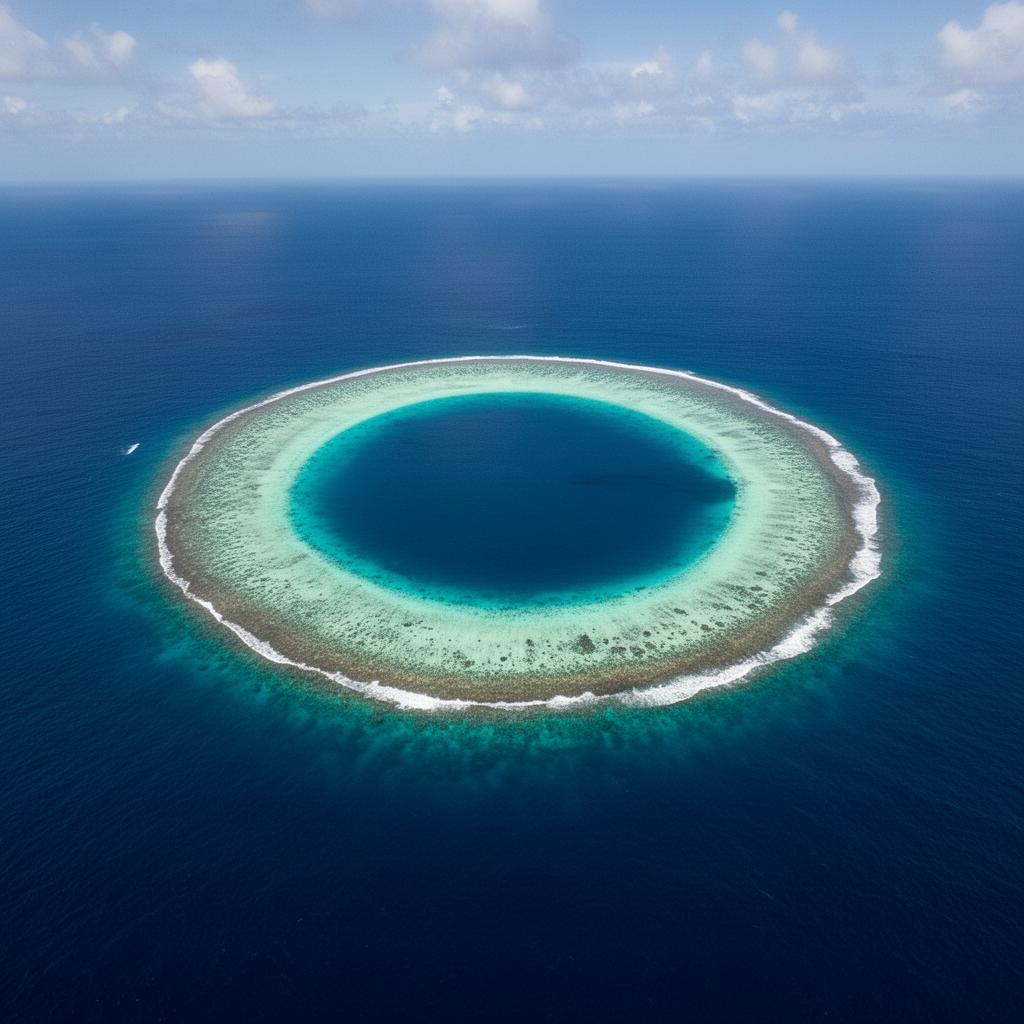
Pacific Island states
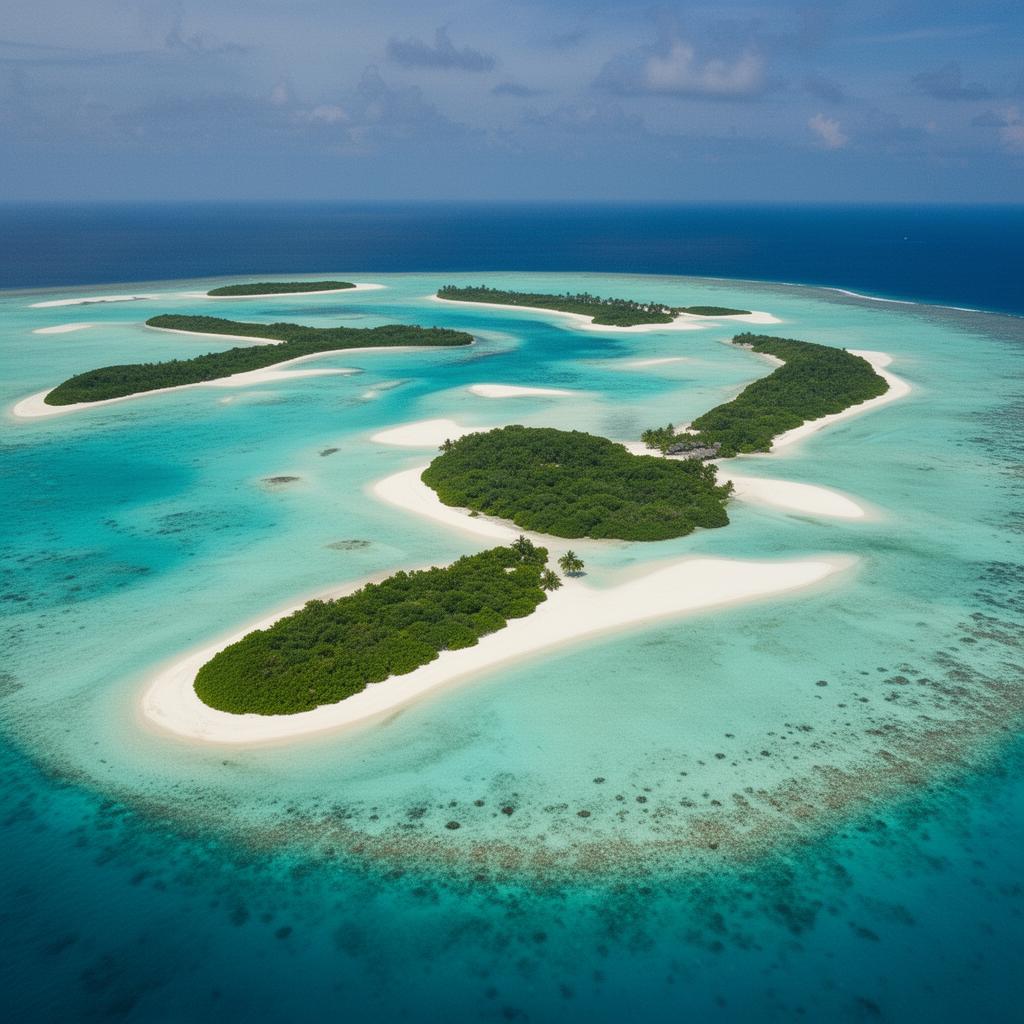
Maldives · Mauritius · Seychelles · Comoros
A continuous process designed for jurisdictions where every tonne of imported material and every cubic metre of landfill carries strategic cost.
Mixed municipal, industrial and marine waste streams are sorted, shredded, dried and standardised into consistent inputs. Magnetic, eddy-current and optical separation recover ferrous metals, aluminium, copper and precious metals upstream of thermal processing — protecting downstream equipment and returning high-value commodities to market.
High-temperature conversion recovers energy and stabilises material into mineral ash suitable for downstream use. Patent-protected incineration stages ensure optimal ash chemistry. Bottom ash is re-screened and re-shredded post-incineration to liberate residual gold, silver and platinum-group metals concentrated in the burn — a second precious-metal recovery pass before mineralisation.
Reactive ash captures CO₂ from concentrated sources, mineralising carbon into permanent crystalline form.
Carbonated material is engineered into aggregate, blocks and cementitious products to substitute imports.
Modular, sea-deployable infrastructure scales to the largest and smallest island economies alike.
A single, continuous flow — engineered to be legible at a glance to ministers, financiers and operators alike.
Rubbish bound for landfill is intercepted at source and routed instead into the plant, where it is sorted, shredded and incinerated. The reactive ash loops back through the plant, mineralised into pellets and graded into aggregate — then bound into concrete and cast as structural blocks.
Two views of the same platform — the mobile resource recovery system in the field, and the material flow that turns non-hazardous waste into engineered fill and aggregates.
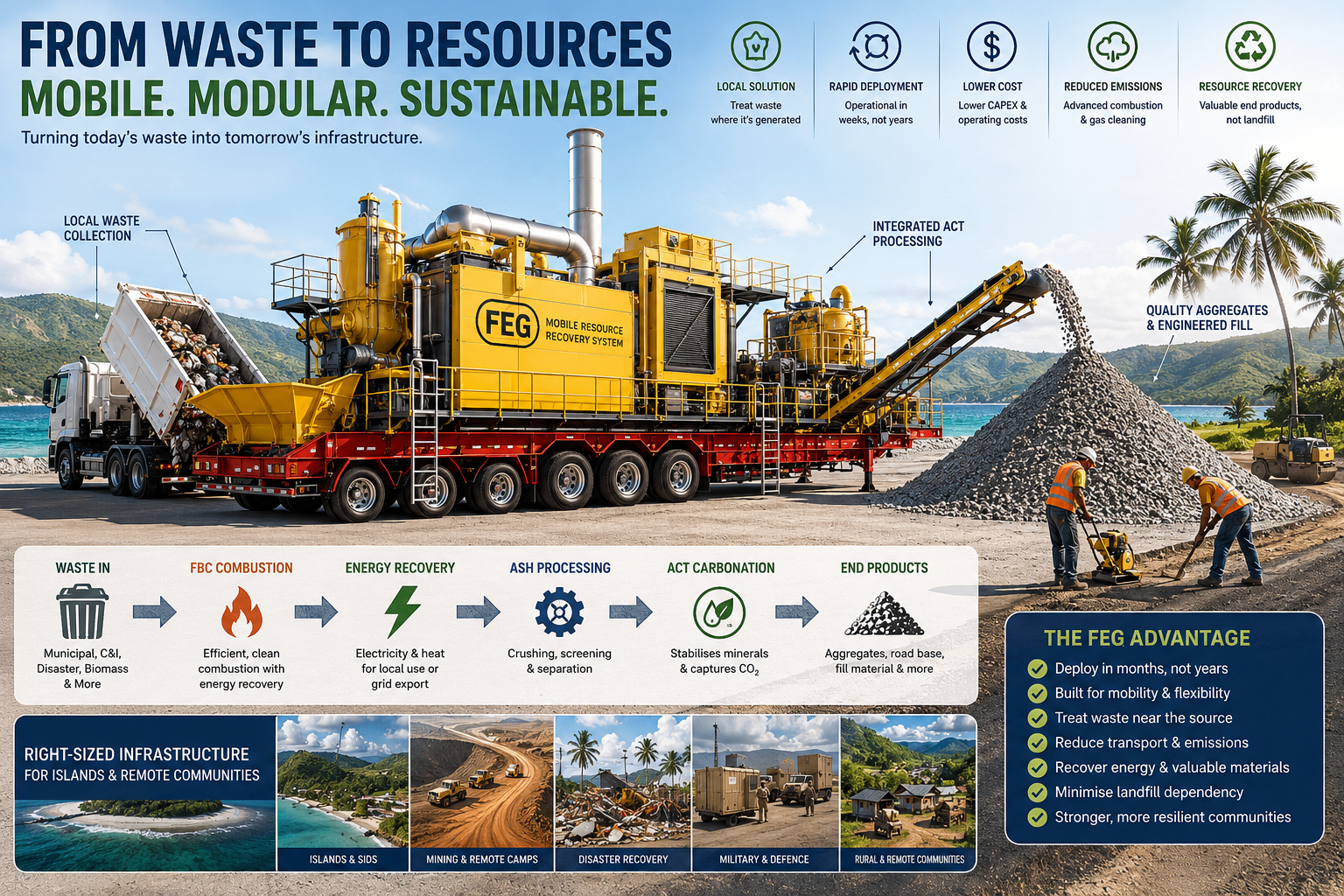

For a century, incineration has been engineered around one variable — electrical output. FEG inverts that logic. Our pending patents protect the engineered composition and reactivity of the resulting ash, the very material from which carbon mineralisation, aggregate and coastal defence are produced.
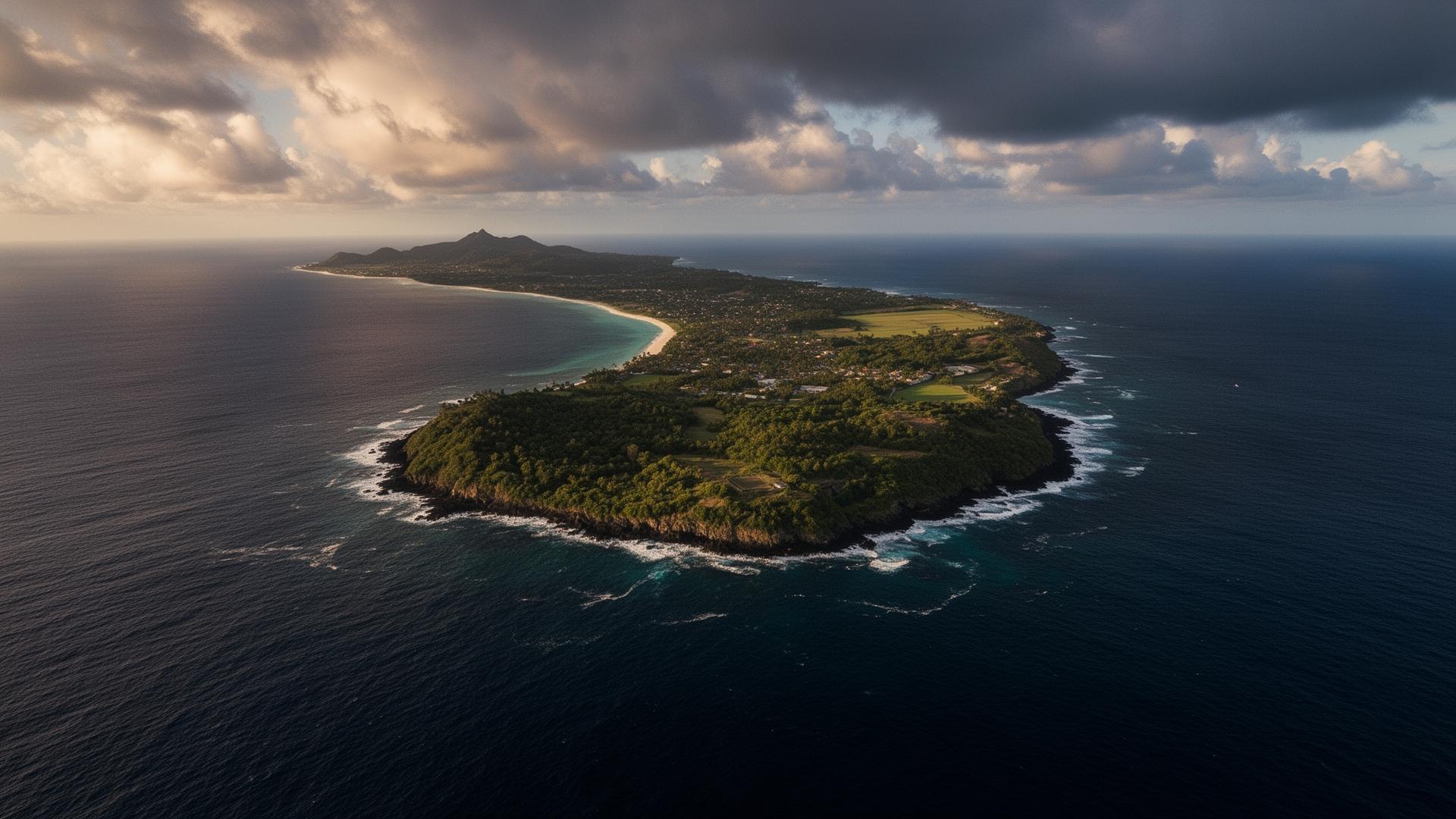
Conventional models were built for continents — not archipelagos.
One is a fixed factory built on assumptions that do not hold for Small Island Developing States. The other is a roving circular manufacturing service — it arrives, eliminates a liability, leaves finished construction products behind, and moves on.
Requires a large permanent site, major civil works, and a population base big enough to justify the plant.
Permanent · site-boundModular units deployed in 5, 15 or 30 tpd configurations and scaled by fleet — ferry-deployable, no civil works.
Designed for island scaleHigh upfront capex, site-specific financing, and significant stranded-asset risk if volumes fall.
Stranded-asset riskFleet can be capitalised once and deployed many times — reducing single-site exposure and improving programme financeability.
Programme-financeableFocuses mainly on incoming waste streams; existing dumps and backlog waste remain separate liabilities.
Legacy liability unresolvedCan clear legacy waste progressively while maintaining ongoing service — both delivered through one operating model.
Remediation + service in oneCombustion releases CO₂ to atmosphere unless expensive retrofit capture is added — rarely viable at island scale.
Net carbon emitterCO₂ off-gas is captured and mineralised through ACT, supporting a lower-carbon or net-negative pathway.
Net carbon negative pathwayHard to adapt to seasonal variation or disaster surges. Sub-economic if volumes drop below the design threshold.
Zero adaptabilityFully configurable fleet can be redeployed, resized or repurposed across sites as demand changes.
Fully adaptiveProduces electricity and ash residue, with landfill still needed for residuals.
Landfill dependency unchangedProduces aggregate, engineered fill, concrete products and potential carbon credits — every fraction has a destination.
Zero residual wasteSame engineering, same supply chain — sized to the island and the programme.
Pilot or micro-island deployment
Single unit operating independently
Small island or phased rollout
One or more units combined as demand grows
Larger island or backlog-clearance service
Multiple units deployed as a fleet
Multi-island service network
Same platform redeployed where needed
Ultra-mobile, zero-footprint deployment
Arrives by sea, processes waste, leaves only aggregates behind
One platform arrives by sea, eliminates a generational liability, leaves finished construction products and permanently sequestered carbon behind — and moves on.
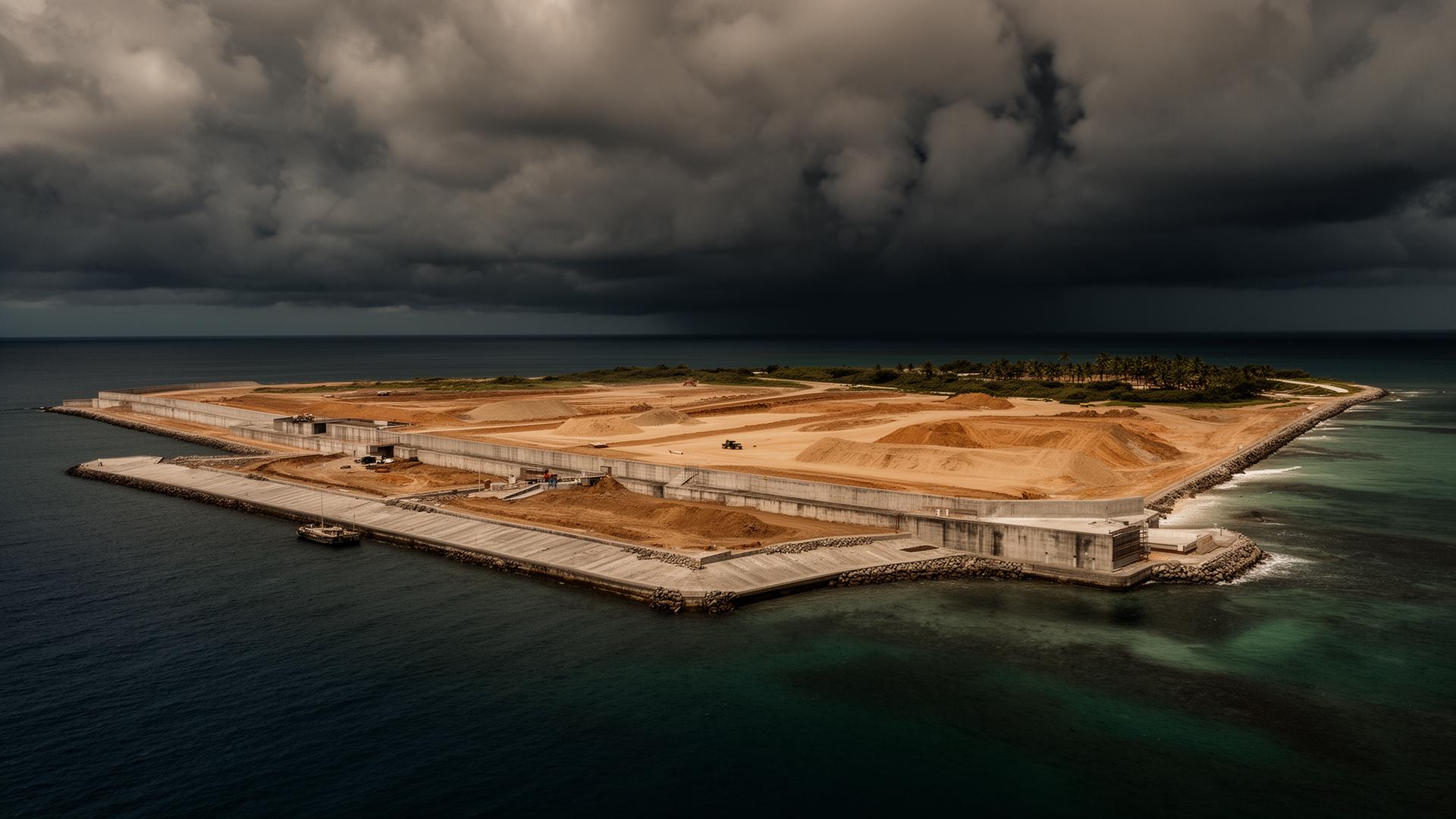
The Circular Infrastructure Alliance Platform converts municipal solid waste into engineered construction aggregate and verified carbon removal credits. In a disaster recovery context, this dual output transforms how island nations prepare for, respond to and fund climate resilience.
Post-disaster reconstruction demands massive volumes of aggregate — for roads, foundations, revetments and drainage. Island states typically import this at high cost with lead times measured in weeks. The CIAP platform produces aggregate locally and continuously, building a stockpiled strategic reserve before disaster strikes.
Existing open landfills on low-lying islands are themselves disaster risks. Storm surge mobilises leachate and waste across communities, compounding damage. The platform removes that hazard at source — intercepting waste streams before they reach landfill and converting them into structural material.
For islands facing inundation, carbonation-stabilised aggregate provides structural fill material for land-raising and coastal protection — produced from the island’s own waste stream. Sovereign material sovereignty, not import dependency, in a climate emergency.
The modular, containerised plant format means units can be redeployed, relocated or replicated across a jurisdiction following a major event. No single point of infrastructure failure. Production resumes where it is needed, not where it was originally installed.
Verified carbon removal credits generated by the platform provide a recurring revenue stream that can be ring-fenced for disaster preparedness, emergency response or climate adaptation investment. Resilience becomes self-funding.
* Resilience outcomes are programme-specific and modelled per jurisdiction. Aggregate reserves and carbon credit volumes depend on feedstock profile and plant scale.
CIAP is delivered through an institutional consortium structured for governance confidence, technical assurance and long-term programme stability.
Originator · Platform Operator
Mandate · Policy · Land
EPC Delivery · Engineering Assurance
Research · Validation · Talent
Capital · Long-duration Finance
O&M · Local Workforce · Lifecycle
Confidential briefings are available to Ministers, Sovereign Wealth Funds, Development Banks and qualified institutional partners.